
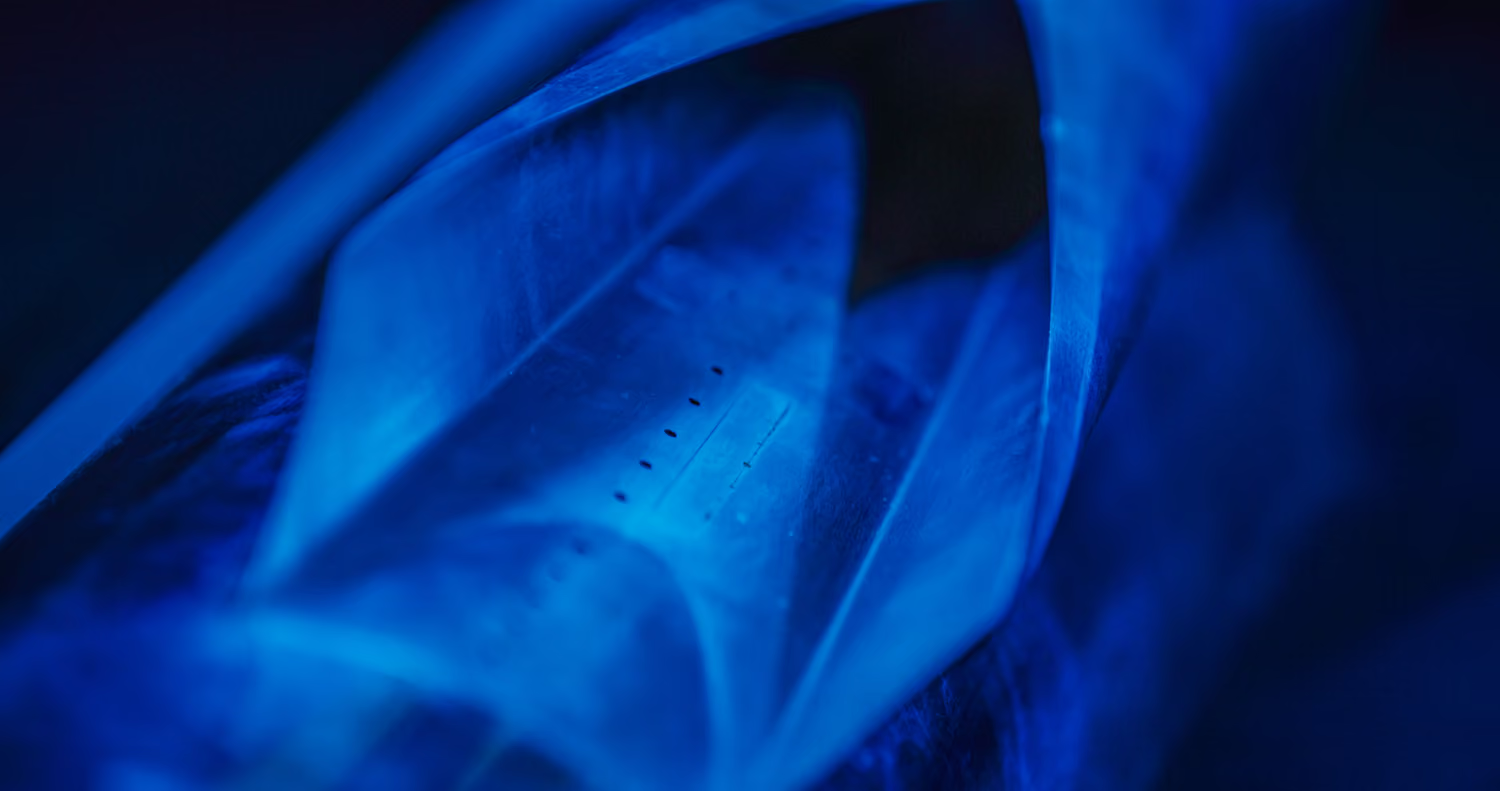
SPARTAN
The world’s first reusable, hydrogen-powered, fixed-geometry hypersonic scramjet engine that delivers reliable performance and faster lead times over more bespoke manufacturing methods.


Delivering sustained scramjet-powered hypersonic flight
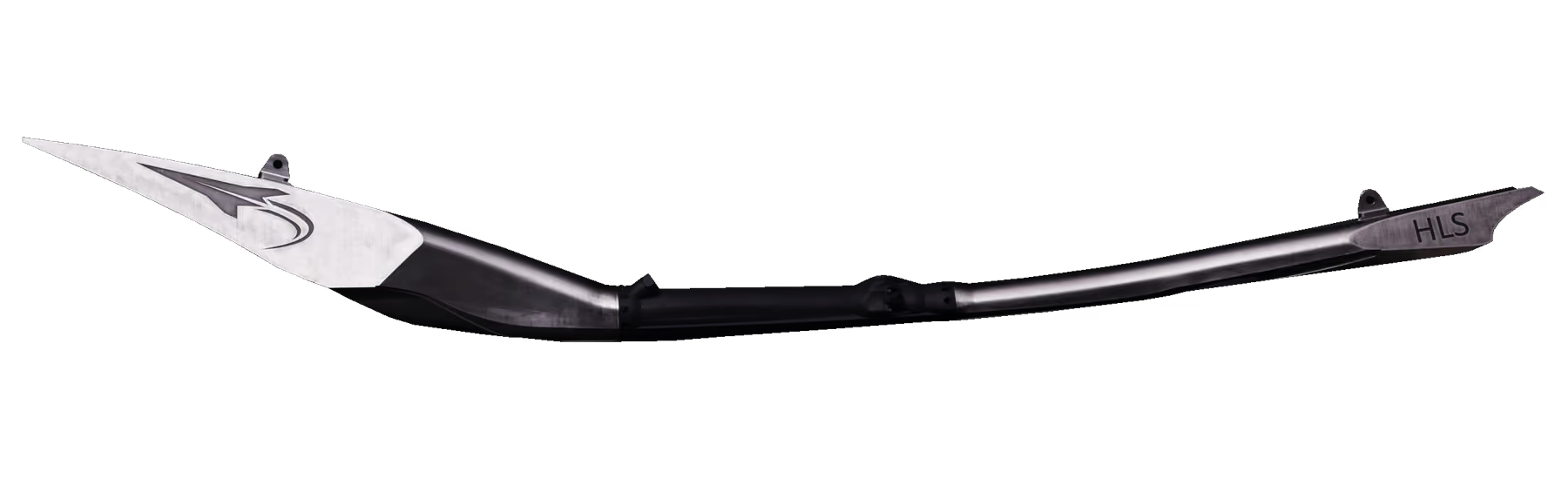

Entirely 3D-printed
Engineered using additive manufacturing with commercial off-the-shelf components. Supports scalability and faster vehicle availability.
Ceramic matrix composites
Manufactured using CMC materials as they are lightweight, have a high strength-to-weight ratio, perform at high temperatures and are shock resistant.
Accelerates to Mach 12
This self-igniting scramjet can turn on and off in-flight, capable of changing speeds between Mach 5 – Mach 12 for a broad mission portfolio.
Reusable and fuel-efficient
Hydrogen-fuel emits zero CO2 and leaves no residue, making efficient use of energy, supporting longer flight times, and multi-mission application.
Specifications
Designed for efficient hypersonic performance
SPARTAN is Hypersonix’s proprietary fifth-generation hypersonic scramjet engine.
This entirely 3D-printed, air-breathing engine is engineered with ceramic matrix composites (CMC), making it suited for cost-efficient, high-cadence hypersonic operations.
The flight-proven SPARTAN is a result of 30+ years of global research, 6000+ ground firings, and 11 suborbital flights through the HIFiRE and HyShot programs.
.avif)
The propulsion system behind boosted hypersonic flight
This hypersonic scramjet engine is designed for mission flexibility and operational control. Unlike conventional scramjets that rely on glide-based flight, the SPARTAN is capable of turning on and off mid-flight, changing acceleration and delivering powered boost when required. This enables sustained, manoeuvrable hypersonic flight rather than passive descent.
.avif)

%20(1).avif)

Hydrogen is fuel for a low carbon future
Hydrogen can be produced from just water, using renewable energy. Burning it in an engine produces only water vapour. There is a global movement towards low-carbon fuels and Australia is set to become a key player in the hydrogen industry, with government and private investment into local green hydrogen production facilities.
Hypersonix has partnered with BOC Australia, who has announced its intention to build a green hydrogen production facility using seawater as the main ingredient, in Queensland.
The clean hydrogen industry is growing quickly Australia-wide, with over $1.6 billion invested in the private sector and $1.27 billion in the public sector. The price of clean hydrogen is projected to decrease to between $2 and $4 per kilogram by 2030.
Hydrogen is an excellent aerospace fuel
The space industry has historically utilised hydrogen as rocket fuel, including in the space shuttle program.
Hydrogen is non-toxic and its low density means any leaks and fires are directed upwards — unlike hydrocarbon fuels, which could pool under the aircraft. Hypersonix’s vehicles are also unmanned, reducing the risks to humans. Hydrogen has approximately 2.5 times the energy density of hydrocarbon fuels, such as kerosene, making it the perfect fuel in an industry where every gram counts.
Get involved
Discover more about our next-generation, reusable hypersonic technology and flight systems
Contact us