
Digital Services
Our digital services create accurate hypersonic simulations using multi-physics factors, AI machine learning and immersive visualisation to represent aircraft in their operating environments. Test concept performance in the virtual world before taking flight.


Evaluate flight performance with AI-powered predicitve modelling
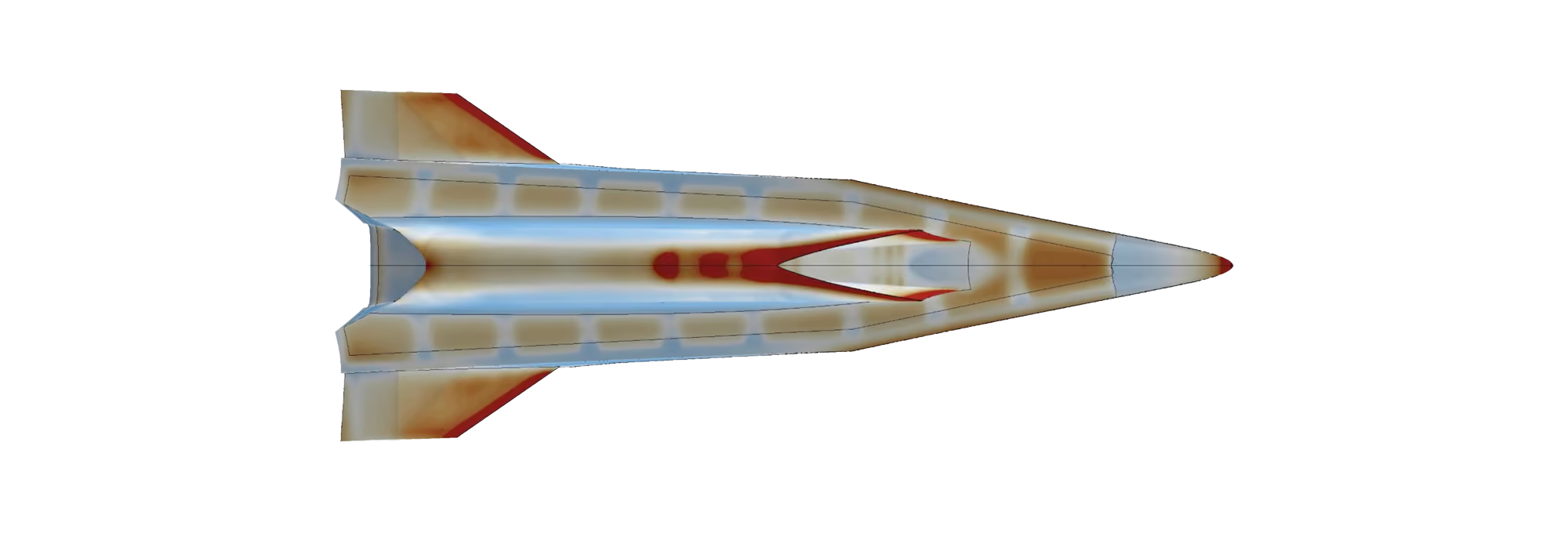

Multi-physics simulation
Hypersonic super-compute capability for coupled fluid, thermal, structural and trajectory simulations.
Virtual experience
Hyper-realistic and interactive end-user visual experience for configuring, executing and analysing flight concepts.
Predictive
Advanced computational modelling framework with machine learning, probabilistic modelling, and artificial intelligence.
Secure architecture
Flexible defence and commercial deployment architectures to suit individual client needs.
Specifications
A range of mission applications
From launch and orbital deployment to counter-hypersonic battle management – our simulation algorithms are customisable and unique to your aircraft and mission scope. The platform models the complex interactions of aerodynamics, thermal loads, structures, and trajectory to evaluate performance, optimise mission concepts, and train detection or response systems.
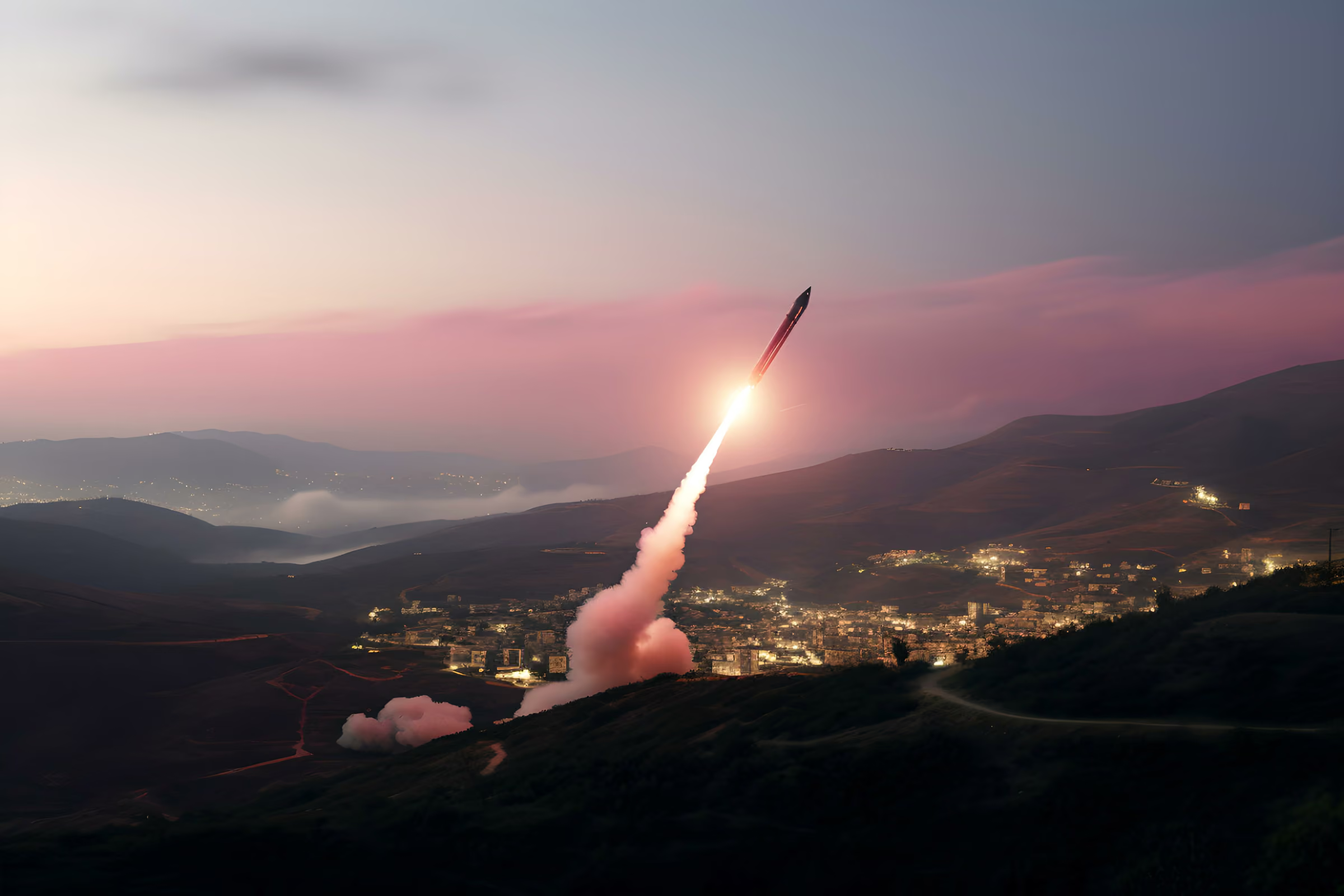
Flight planning and evaluation
These services are designed for mission planners and engineers to get a true understanding of flight performance for better-informed decision making. By enabling extensive virtual flight testing and rapid iteration, Hypersonix’s digital services reduce cost, risk, and development timelines from concept to real-world hypersonic capability.

%20(1).avif)

Hydrogen is fuel for a low carbon future
Hydrogen can be produced from just water, using renewable energy. Burning it in an engine produces only water vapour. There is a global movement towards low-carbon fuels and Australia is set to become a key player in the hydrogen industry, with government and private investment into local green hydrogen production facilities.
Hypersonix has partnered with BOC Australia, who has announced its intention to build a green hydrogen production facility using seawater as the main ingredient, in Queensland.
The clean hydrogen industry is growing quickly Australia-wide, with over $1.6 billion invested in the private sector and $1.27 billion in the public sector. The price of clean hydrogen is projected to decrease to between $2 and $4 per kilogram by 2030.
Hydrogen is an excellent aerospace fuel
The space industry has historically utilised hydrogen as rocket fuel, including in the space shuttle program.
Hydrogen is non-toxic and its low density means any leaks and fires are directed upwards — unlike hydrocarbon fuels, which could pool under the aircraft. Hypersonix’s vehicles are also unmanned, reducing the risks to humans. Hydrogen has approximately 2.5 times the energy density of hydrocarbon fuels, such as kerosene, making it the perfect fuel in an industry where every gram counts.
Get involved
Discover more about our next-generation, reusable hypersonic technology and flight systems
Contact us