
%201.jpg)


Meet DART AE
The revolutionary DART AE is an autonomous 3D-printed, hydrogen-fuelled scramjet technology demonstrator.
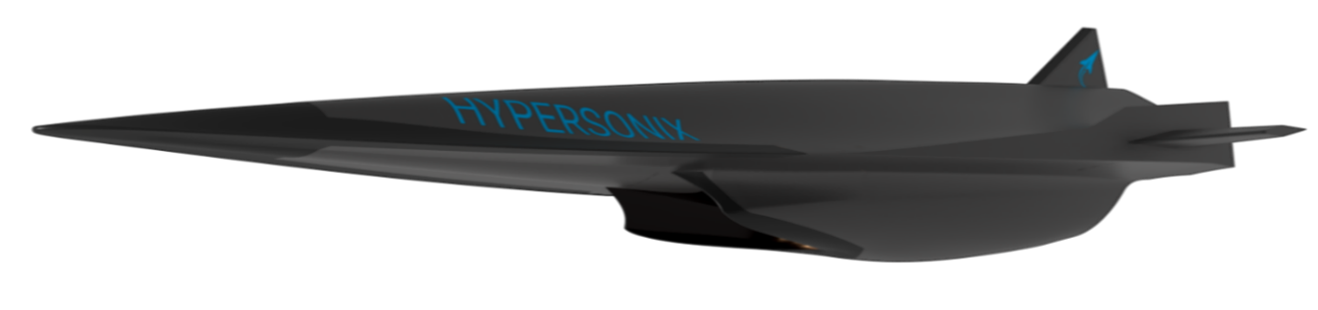

Entirely 3D printed airframe
DART is the worlds first entirely 3D printed airframe of a hypersonic launch vehicle. It’s additive engineering production aligns with Government and Industry objectives.
Future-focused strategy
By designing and manufacturing in Australia, Hypersonix is contributing to Australia’s sovereign capabilities. With the ability to scale globally, DART is fit for national security, Government, and defence programs.
Hydrogen-fuelled propulsion
Our SPARTAN scramjet engine, powered by green hydrogen, provides the necessary thrust to propel DART at hypersonic speeds. This air-breathing engine emits zero CO2 during flight.
Low cost hypersonic tests
DART is designed to be a flight demonstrator vehicle. With rapid and cost-efficient deployment, this aircraft is purpose-built for testing hypersonic capabilities.
Specifications
High-speed meneuverability
DART is an autonomous hypersonic aircraft that uses aerodynamic control surfaces to fly a pre-planned trajectory. After being boosted to initial flight conditions, with either guided or unguided rockets, the aircraft is capable of performing signifcant changes in flight direction and altitude - while maintaining hypersonic speeds and carrying a payload.

Low cost, high cadence
Using commercially available flight-proven materials and additive manufacturing techniques, DART is designed for rapid production and scalability. Hypersonix partners with New Space companies to utilise the right components and processes to provide a reliable, affordable high cadence flight capability.
.jpg)

Powered by SPARTAN
DART is powered by a single SPARTAN, Hypersonix’s fifth generation scramjet engine. The hydrogen-powered SPARTAN is the world’s first fixed geometry 3D-printed scramjet engine, delivering hypersonic performance, reliability, lead time and cost advantages over more bespoke manufacturing methods.

Hydrogen is fuel for a low carbon future
Hydrogen can be produced from just water, using renewable energy. Burning it in an engine produces only water vapour. There is a global movement towards low-carbon fuels and Australia is set to become a key player in the hydrogen industry, with government and private investment into local green hydrogen production facilities.
Hypersonix has partnered with BOC Australia, who has announced its intention to build a green hydrogen production facility using seawater as the main ingredient, in Queensland.
The clean hydrogen industry is growing quickly Australia-wide, with over $1.6 billion invested in the private sector and $1.27 billion in the public sector. The price of clean hydrogen is projected to decrease to between $2 and $4 per kilogram by 2030.
Hydrogen is an excellent aerospace fuel
The space industry has historically utilised hydrogen as rocket fuel, including in the space shuttle program.
Hydrogen is non-toxic and its low density means any leaks and fires are directed upwards — unlike hydrocarbon fuels, which could pool under the aircraft. Hypersonix’s vehicles are also unmanned, reducing the risks to humans. Hydrogen has approximately 2.5 times the energy density of hydrocarbon fuels, such as kerosene, making it the perfect fuel in an industry where every gram counts.
Get in touch with us
To discuss our scramjet engines, flight systems or launch systems with a Hypersonix representative, please complete the contact form.
Contact us